When our loved ones age and gradually turn from people who need help to people who need help, many questions arise about their future. But, the question that concerns the elderly and their families the most is, what are the housing options for the elderly? What is the most optimal residential option for them.
Answers to these questions can vary from family to family. So before you go looking for a housing solution for the elderly, it is important to consider three things:
There is a variety of housing options for the elderly, depending of course on their functional and cognitive condition.
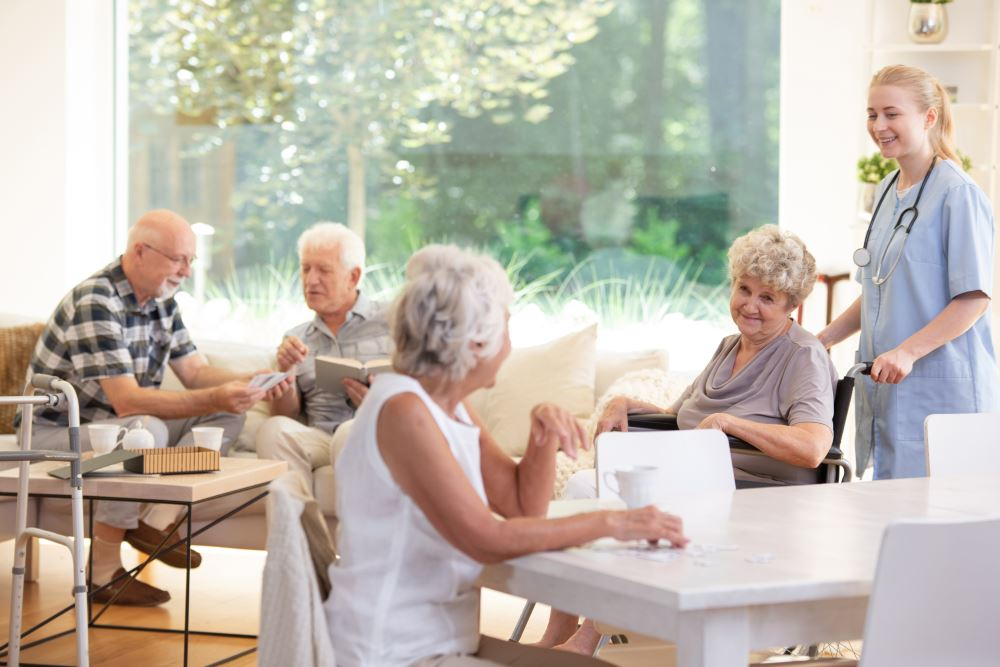
Designed for seniors who can manage their daily lives, and can take care of themselves. In this case, assisted living for independent seniors may be the best option for them.
People who fit this arrangement can do their chores without help and still enjoy morning walks. Assisted living is a great option for seniors looking for a single apartment designed especially for them.
In sheltered housing for independents, there is a separate apartment for each tenant who comes to live there. Also, every sheltered housing has a variety of services provided to the elderly who live there. Services such as: transportation, nurse, social worker, various classes, lectures.
Sheltered housing for the independent, as said, is suitable when both spouses are independent. But, what happens when one of the spouses dies or becomes ill? So the responsibility for the treatment passes to the children of the sick parent, when in many cases their responsibility for him, becomes a physical and emotional burden for them. The decision on which housing solution to choose should be for the benefit of the elderly only.

Imagine the following scenario, your mother-in-law, moves in with your family. The change is inevitable and you made room for her in the apartment. However, after a few months, problems start to emerge. Tension and conflicts suddenly arise and the marital relationship between you and your partner begins to deteriorate.
You miss the feeling of privacy and calm that existed in your home before. To be honest, your mother-in-law is gradually getting older, maybe it’s time to consider a new housing option for her?

As stated before, the possibility of living depends on the health of the elderly and their therapeutic needs. In the long run, the years take their toll and your mother-in-law’s health deteriorates and it is difficult for her to live alone.
Daily activities such as preparing meals as well as monitoring the swallowing of pills become more complex activities for her.
There is no fear, because there is a way to still maintain most of her independence, with only one small addition: the help of an external caregiver. An external caregiver can be obtained through a nursing company or can be obtained independently. Today, the National Insurance allows you to get paid hours to get the caregiver you are interested in, independent of a nursing company, this can have advantages and disadvantages. To get more information about this, read the article about the new nursing reform.
A caregiver who comes to the elderly’s home according to the nursing hours given to the elderly, provides him with the help he needs, she can help him with household chores such as: cleaning, cooking and laundry, shopping, escorting to tests and of course the daily activities that the elderly need help with.
An Israeli carer can help a maximum of 28 hours a week and a foreign worker lives with the elderly, when he is completely dependent on the help of others.
The elderly living in the community can also receive nursing hours for a day center if they are interested. These hours are included in the total number of nursing hours due to him. As part of the day center, the elderly receive lunch and various social activities such as: lectures, creative workshops, performances, etc. The centers, open 6-5 days a week from morning until noon, are operated through local associations for the elderly, under the supervision of the service for the elderly at the Ministry of Welfare.
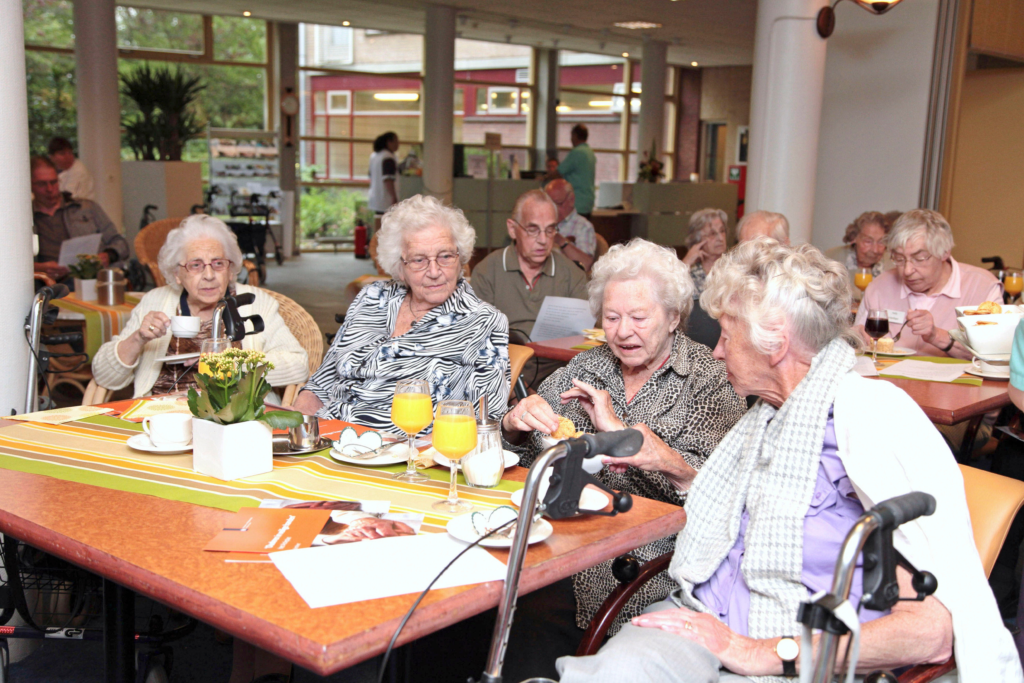
A nursing home offers a form of housing that provides comprehensive care and service for all areas of life, according to the functional status of the elderly.
Each nursing home has a medical team, a medical and nursing assistant, a social worker and an administrative team whose job it is to take care of the elderly’s quality of life in the best possible way.
There are four departments that correspond to the four functional states: the self-employed department, the debilitated department, the nursing department and the debilitated department. The way the wards are combined, the style of the place and the cost vary between nursing homes and places can be found according to the financial capacity of the resident and his family members.
This housing solution is suitable for independent people, who need a framework that provides security and company.
A framework that provides people who need a little help in their daily activities. To understand this functional condition, go and read the article on functional conditions in the third age.
which are under the supervision of the Ministry of Welfare, it is possible to receive funding from the Ministry of Welfare for them. You must go to the social worker at the welfare office in order to receive this funding.
They are supervised by the Ministry of Health and you can get a code from the Ministry of Health, in order to receive funding for them. You must go to the nearest health office to your area of residence and receive advice and guidance on the process. Nursing people need help with most or all of the daily functions and the mentally ill are the elderly who have dementia or have had a stroke and their cognitive functions have been impaired.
Besides the medical services, the residents of the nursing home enjoy many social activities and circles. There are nursing homes that make sure to integrate the residents into the general community, through joint classes, voluntary activities and more.
A nursing home is an institutional setting for senior citizens who need care and supervision after discharge from a hospital and for those who cannot live in their own home for family or other reasons. The vacation stay is for a short period and includes accommodation, meals, personal care, health services, social service and social activity.
There are designated holiday homes for nursing senior citizens and ultra-Orthodox senior citizens.
To locate vacation homes for senior citizens according to different localities throughout the country, see the service database of Joint Israel-Eshel (you must select the type of service – “Vacation, RESPITE”).
Those who have reached retirement age, are self-employed, are defined as exhausted and answer one of the following:
The process of exercising the right: the senior citizen or his family members will apply to take him on vacation to the social services department next to their area of residence – to locate the nearest department.
The attending attorney will determine the eligibility, fill out a “Decision on Placement” form and have the applicants sign an undertaking that the arrangement is temporary and at the end of it the senior citizen will return to live in the community. It should be noted that the vacation is for a period of 15 days. It is necessary that it be approved on- by the Department of Social Services. In special cases, a vacation between 16 and 60 days will be approved by the district supervisor of the senior citizen service. In addition, in cases where the senior citizen cannot be returned to his home, and until an alternative framework is found for him, a vacation between 31 and – 36 days subject to the approval of the senior citizen service manager or his deputy. It should be noted that the senior citizen will be directed to vacation in a framework appropriate to his function and in accordance with his choice.
The Ministry of Construction and Housing manages about 120 housing homes for the elderly, which include approximately 12,000 one-and-a-half or two-room apartments (to locate the housing homes for the elderly on the website of the Ministry of Construction and Housing). 50% of the vacated apartments are intended for immigrants and 50% for veterans and tenants moving from public housing. It should be noted that the housing estates are mostly operated by government companies and partly by private companies.
In addition, the staff of the housing houses includes a house mother, a maintenance person, a social worker, a social coordinator and a caregiver for the elderly. The tenants participate in various social activities, such as: clubs, classes, classes and trips. Also, living in the Golden Age House involves paying a rent that ranges from 8%-10% of the national insurance allowance or any other income of the tenant, apart from the allowance (rent) paid by the German government.
Individuals or couples who meet all of the following conditions: are homeless or tenants in a public housing apartment moving out of their apartment. Have reached retirement age and are eligible for an old-age pension upon supplementing income. Independent in their function (not nursing).
In accordance with a temporary order valid until the end of December 2019, the age of eligibility to enter a senior citizen home has been brought forward for those who are eligible for rent assistance: in the homes that appear on this list that have few eligible people waiting to enter them, the minimum entry age has been lowered to 60. In the homes that appear on this list that have no eligible people waiting to enter For them, the minimum entry age was lowered to 55.
An application must be submitted for a housing unit in the Golden Age House:

Rehabilitation is a therapeutic step in an ongoing healing process, the goal of which is to improve the specific motor and cognitive functions that have been impaired due to illness or injury. Also, increasing the patient’s personal independence so that he can return to leading an active and healthy lifestyle. It should be noted that the responsibility for providing rehabilitation is anchored in the State Health Insurance Law and applies to the health insurance fund that insures the patient according to the second addendum to the law.
The health insurance funds are obliged to inform each patient and his family about his rights to exploit the rehabilitation potential, while referring to the appropriate parties, as well as bring to their attention the existence of assisting parties. The rehabilitation process can be done intensively in a hospital setting or in the community.
A rehabilitation patient who meets the criteria for inpatient rehabilitation will be hospitalized for a period of up to three months. Hospitalization for a longer period is possible, with the approval of a professional committee of the HMO.
Elderly people who are in a complex nursing situation are arranged in complex nursing institutions through the health insurance funds. To learn what the criteria are for a complex nursing patient, go to the article – Functional conditions in the third age.
When an elderly person defined as a compound nursing patient is admitted to a hospital and wishes to go to a nursing home, he must contact a social worker in the department where he is hospitalized. The social worker will contact the liaison nurse of the health insurance fund where the old man is a member, and she will ask the geriatrician for permission to arrange for the old man. The geriatrician’s answer at the HMO will be given to the hospital. Upon receipt of the approval, the social worker will inform the elderly in which nursing home he can be admitted, according to the instructions of the health insurance fund. After the payment is settled, the HMO will issue a bond and the elderly person will be able to move to the nursing home.
An elderly person who is at home and wishes to move to a nursing home, should contact his family doctor. If the doctor defines him as a complex nursing patient, he will forward the request to the geriatrician in charge of arrangements in complex nursing wards. Upon receipt of the doctor’s or someone else’s approval, the elderly will be told in which nursing homes he can be hospitalized, according to the instructions of the health insurance fund. After the payment is settled, the HMO will issue a bond and the elderly person will be able to move to the nursing home.
All 8 housing options depend of course on his functional and cognitive condition. Also, how involved the elderly is in the decision, his thoughts, feelings and health.
Finding suitable housing for a person who raised us or we know him since he was young and energetic, is definitely not an easy task mentally.
Make sure that you do listen to the opinions of your loved one and yourself, before you make your final decision.
The elderly person needs love, care and respect in his advanced age. as you have received from him throughout your life. Therefore, make sure when you come to inspect potential housing that there is indeed an appropriate and respectful attitude towards the tenants. Pay attention to the personnel situation in the departments and check their standards in the government ministries, health and welfare. Check the inspection scores the nursing homes received either in satisfaction surveys on the Ministry of Health website or on the Gold Factor website.
If you would like to consult with me about suitable housing for your loved one, you are invited to contact me through the website or by email at irit@happyseniors.care or by mobile – 054-7758564 and I will gladly advise, free of charge.
Likewise, I can also help with the relevant housing entrance status both mentally and in terms of the bureaucratic processes for obtaining financing.




Error: Contact form not found.